

Before anyone ever saw the confident, steady, financially disciplined version of Frank Pete that people know today, there existed a much quieter, much more fragile chapter of his life one that shaped him in ways no success ever could.
Most people only meet someone after they’ve risen.
They see the results, the stability, the confidence, the success.
But they rarely see the storm that person crawled out of.
They rarely see the moments that nearly broke them.
Frank’s journey into financial collapse didn’t begin with a loud crash.
It started the way many downfalls begin silently.
A missed payment.
An unnecessary expense.
A risk taken with too much confidence and too little understanding.
Life has a way of whispering before it screams.
The Quiet Descent
Frank remembered the early signs clearly.
They weren’t dramatic.
Nothing that would make someone stop and worry.
Just… little shifts.
He would tell himself he’d catch up later.
“That bill can wait.”
“I’ll fix the budget next month.”
“I deserve to treat myself right now.”
Little rationalizations.
Little delays.
Little lies we all tell ourselves when life feels overwhelming and money feels like a temporary problem.
But temporary problems when ignored turn permanent.

Frank didn’t realize how far he was slipping until one morning, sitting at his kitchen table, he stared at a stack of unopened mail… and felt something he hadn’t felt in years:
Fear.
Not fear of failure.
But fear of facing reality.
He could feel his heartbeat in his throat,
the kind of rhythm that makes you swallow hard and pretend everything is fine even though nothing is fine.
That morning marked the beginning of his collapse…
but also the beginning of his transformation.
The Emotional Weight of Financial Crisis
People often underestimate the emotional impact of financial hardship.
Frank would later explain it like this:
“It wasn’t the numbers that broke me. It was what those numbers made me feel about myself.”
And that’s the truth many people hide.
Financial struggle doesn’t just drain your bank account
it drains your confidence, your self-worth, your sense of direction.
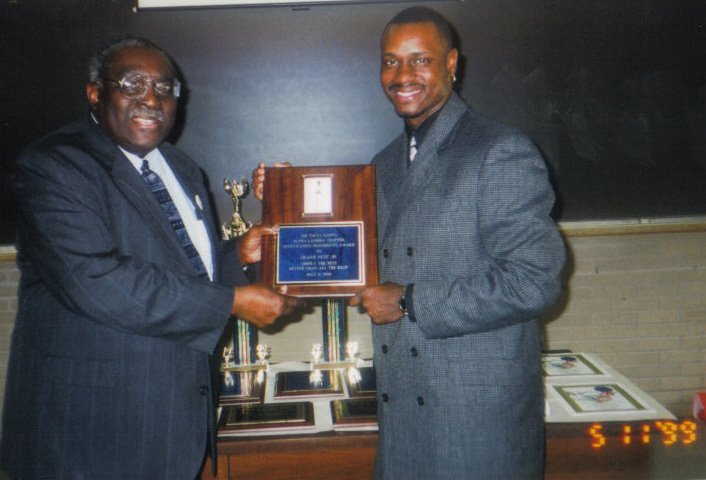
During that period, Frank lived inside a quiet panic.
He would wake up with a heaviness in his chest,
a feeling that no matter how much effort he put in, he was still falling behind.
He avoided phone calls.
He avoided conversations about money.
He avoided his own reflection sometimes, afraid it would look back at him with disappointment.
And yet, even in the middle of this storm, life still demanded everything from him
responsibilities, deadlines, expectations.
He felt like he was carrying a weight no one else could see.
The Breaking Point
Every collapse has a moment where everything becomes undeniably clear.
For Frank, it happened late at night, sitting alone in his living room, surrounded by paperwork and debt notices. The house was silent except for the sound of his breathing uneven, heavy, tired.
He realized he couldn’t outrun his problems anymore.
He couldn’t pretend things would magically improve.
He felt something inside him crack
not a breakdown, but a break-open.
A moment of brutal honesty.
He whispered to himself,
“I did this. And I have to fix it.”
Those words didn’t solve his problems,
but they took away the shame.
Owning his mistakes didn’t weaken him
it freed him.

The Slow, Imperfect Rebuild
Rebuilding wasn’t glamorous.
There were no motivational speeches,
no overnight transformations,
no cinematic breakthrough moments.
There was just effort
slow, repetitive, frustrating effort.
Frank began studying everything he didn’t know.
He questioned habits he thought were harmless.
He tracked expenses, researched financial principles, learned budgeting strategies, and confronted every mistake he had been avoiding.
Some days he made progress.
Other days he slipped back into old patterns.
But he didn’t quit.
He couldn’t quit
because quitting would mean returning to the version of himself, he was trying to leave behind.
As weeks turned into months, something shifted.
His decisions became sharper.
His mindset became stronger.
His understanding of money deepened.
He was no longer reacting emotionally
he was thinking strategically.
What the Collapse Taught Him
Frank would later say that his financial collapse did something unexpected:
It made him human again.
It stripped away ego,
replaced pride with humility,
and forced him to see that financial success has nothing to do with luck…
and everything to do with awareness, discipline, and education.
He learned:
Most people struggle because no one ever taught them how money truly works.
Avoidance is more expensive than any financial mistake.
Stability is built on daily habits, not sudden breakthroughs.
Pain can be a teacher if you let it.
From Pain to Purpose
The more Frank rebuilt, the clearer his mission became.
He didn’t want anyone else to experience the loneliness he felt during his collapse
the shame, the confusion, the helplessness.
He realized something powerful:
His story wasn’t just his own.
It was the story of millions of people silently struggling with money.
What he learned the hard way,
he could teach others the easier way.
His collapse didn’t break him
it rebuilt him into someone stronger, wiser, and deeply empathetic.
And that’s why today, people trust Frank.
Not because he’s perfect
but because he’s real.
He didn’t rise from success.
He rose from disaster.
And he carries that truth with him in everything he teaches.
Frank’s financial collapse wasn’t the end.
It was the beginning of the life he was meant to live.